Showing posts with label Review. Show all posts

Wednesday, 18 February 2015

The North Face Prism Optimus Hoodie Review

I recently received a The North Face Prism Optimus Hoodie for a recent trip to the Alps. This trip wasn't a normal winter alpine adventure. I didn't ski, I didn't exactly climb any ice falls. Instead I spent lots of time sat in darkened rooms and stood around looking at things. That's right I was at the UIAA Ice Climbing World Cup!
Prism Optimus Hoodie in Italy

Insulation
With all this standing around I was going to need something rather well insulated to keep me warm. The 700 fill of down found in the Prism did this brilliantly. I did get a bit chilly at times but I think this was probably mostly down to getting cold feet, drawing heat away from my core, as apposed to directly losing it. The jacket claims to have synthetic insulation in the shoulders and arms, and down in the torso. I haven't really noticed any difference between the different insulation though.

Fit
I got the jacket quite large as to allow layering underneath.  This would typically cause the jacket to feel quite bulky, but surprisingly it doesn't. An interesting feature of the jacket I didn't expect were its cuffs. Typically the elastic part of a cuff is the part of the sleeve which sits furthest down the arm. In the case of the prism this is not so. Instead a cuff of insulation sits down below this. Despite initial reservations I really liked this feature. It eliminated the cold spot which could develop between a glove and the jacket. The hood was rather large and can accommodate a helmet if needed.

Looks
I thought this jacket looked pretty smart. I have it in the TNF Red colour, which is a quite pinky sort of red. It also happened to be the same colour as the Korean national team jacket, and the Koreans are quite good at ice climbing. I guess if I look the part it might transfer to my climbing as well.
Taking the Prism Optimus Hoodie for a snowy walk

Storage
Pockets are the simple little things which makes a jacket work. Their positioning, size, shape and zips, or lack of, are important things to get right. The Prism features 2 zippered hand warmer pockets, a zippers chest pocket and a cavernous internal pouch. The hand warmer pockets are even big enough to fit 2 hands in, if your girlfriend decides it's too cold! The internal pouch can be used as a stuff sack as well.

Build quality
The North Face is quite well known for good build quality. This is obvious in the Prism with very little loss of down in the main torso. This is achieved mainly by having no sewed seems, which are instead welded. The fabric feels soft to the touch, but also hard wearing.

Overall
I was almost inseparable from this jacket once I returned from Europe. I even had to force myself to hang it up in a cupboard so that I didn't ruin it. Although I can hardly comment on its use for climbing or mountaineering what I can say is that it performed brilliantly for everything I asked of it.

I give this a maximum rating of 2 thumbs up.

This jacket is available from outdoorkit.co.uk with a massive 60% off!

Thursday, 6 November 2014

Haglofs Gram 7 Rucksack Review

I received the Haglofs Gram 7 Rucksack this summer with the view of using it as a running pack, after starting fell running in July. It has mostly been used for this, but I have also found it useful as a small climbing pack.
The basic rucksack design is pretty standard, with 2 comfortable shoulder straps, waist and chest buckles and pockets on the hips. The bag features a large main compartment with a small valuables pocket and a pouch for a hydration system.
Running sack (Photo Credit: Esk Valley Fell Club)
To be any good as a climbing or running pack it needs to be light. The Gram 7 weighs in at a mere 395 grams, which isn't too bad at all. It has a compact design preventing it from flapping around when running, or getting stuck whilst climbing.
The fabric which the pack is made from seems pretty strong, so I'm not too worried about scratching around against rough rock with it on.
Winter climbing sack (Photo Credit: Robert Taylor)
This is a small bag so there isn't much room. I have been unable to find any quoted sizes, however I suspect it might be 7 litres, thanks to the name. This is perfectly big enough for fitting in your fell running kit or a jacket, guide and some food for a climb.
There is nothing that special about this bag, but it doesn't need to be special. It was worked perfectly for everything I have used it for.
I give this 2 thumbs up!
The Haglofs Gram 7 is available from outdoorkit.co.uk with 40% off! Yes nearly half price.

Sunday, 7 September 2014

Grivel Plume Quickdraw Review

The Plume quickdraw is Grivels lightest offering in the world of Quickdraws.
They come in a range of sizes with slings from 11 to 23cm. These slings a made of 10mm dyneema, which is pretty standard for quickdraws, decorated in Grivels gold and black. 
Both ends feature a plume karabiner, which has a wire gate, a nice clipping action and a large opening. These karabiners are colour coded with black on the gear end and a fixed gold biner on the rope end.
This all looks very promising, however the proof of the pudding is in the eating, or climbing in this case as they are a bit tough.
Plumes in use on The Diedre, Kilnsey (and Alex)
I have used these quickdraws quite extensively since getting them, from limestone sport crags to gneiss trad sea cliffs, and lots in between. In all of these setting they have performed very well.
Some Plume draws on my harness somehwere
These draws are very lightweight, meaning that they feel very light on your harness. Less weight means the potential to carry more gear, or just be lighter.
The large gate opening means that these quickdraws are very easy to clip. This has come in handy when you really don't want to fumble a clip, like during the awkward crux of Silkie on Dun Mingulay!
The easy clipping also makes them great to use whilst sport climbing. Grivel do a version of these with a plastic dog bone style cover, making the sling rigid. The idea behind this is to make them easier to pull on whilst working a sport route, but honestly I find these much harder to hold onto than just the basic sling.
Plume Draws in use at Traprain Law (and Elaine)
I couldn't find any faults with these quickdraws until, disaster! One of the gates became sticky and stopped springing closed. This has only occurred on one of the karabiners, and will occur in time with any wire gate karabiner anyway, although it has happened rather quickly with this one. Maybe its just the runt of the Plume litter. A bit of WD40 should sort it out.
All in all I think these are great bits of kit and deserve a place in anyones rack, however for the sticky gate I can only give them 1 thumb up, otherwise it would have been a definite two.


Monday, 21 July 2014

Petzl Ange Finesse Quickdraw Review

Over the past couple of months I have been testing a few sets of quick draws. The first of these to get a look over by my "expert" eye are the Petzl Ange Finesse Quickdraws.
As with any other draw these are made of 3 major components, 2 carabiners and a sling. The Ange carabiners are quite an interesting design featuring just a single wire for the gate. You can think of it a bit like a very narrow solid gate biner. This should have made them rather light however, weighing in at a 28g for a small or 34g for a large, gear wads will know that this is hardly groundbreaking. To lock the two end of the carabiner together when closed the gate fits into a groove in the nose of the biner. This prevents the rope getting stuck in the gate while clipping. Nice.
In quickdraw form 2 different colors are used for the biners. Blue or orange are used to indicate the rope end and silver indicates the protection end.
The quickdraws come in a range of lengths, all using the same width slings. Pretty standard really. These slings are heavily stitched, which must add a bit to their weight, and ever little helps when going super-light. When you compare these to other quickdraws in their price range, then these really aren't that light.
If you are a sport climber then you dont want these! Firstly the thin gate is very difficult to clip and secondly they don't work with clipsticks!
Despite me being quite excited about getting these to begin with they have largely been relegated to attaching my climbing shoes together.
I give this a rating of 1 thumb down. For being advertised as a super-light draw they totally disappoint.

Saturday, 10 May 2014

Sports Nutrition for Mountaineering

I received a selection of sports nutrition products this winter from High5 to test out while climbing.
High5 makes energy packed foods for high intensity activities, and recovery supplements such as protein for after. These sort of items are usually associated with things like Triathlons, not mountaineering. Im not trying to say climbing and mountaineering isn't hard, but I don't really think they are generally in the same league of intense exertions of energy as triathlons, although I suspect some people may disagree with that. Also, not trying to take anything away from triathlons here, but mountaineering is probably more mentally demanding. Hard climbs cannot always be overcome by shear brute force and excessive use of energy, and this is especially the case in mountaineering.
Energy Gels
I decided if I was to properly test out the usefulness of sports nutrition in Scottish mountaineering I would have to have a rather big day. I have a few of these things planned in the Scottish mountains, some involving an arbitrary number of routes and others of more historical significance. In the end I settled upon attempting to climb all the major ridges on Ben Nevis in a day. This involved over 2000m of climbing, at least the same amount of descent and lots of walking. I managed it, well within a day (see my article from earlier), using an arsenal of sports nutrition.
During the day I consumed the High5 products; EnergyGel, EnergyGel Plus, IsoGel, IsoGel Plus and EnergyBar.
Each of these energy snacks work in a slightly different way. EnergyGel's are your standard energy gels designed to give you lots of energy. You are however required to consume a lot of liquid to be able to use these, which isn't always possible while climbing. IsoGel's are a bit like EnergyGel's, however they also contain some liquid, making them suitable for use without consuming much extra. I generally find it quite difficult to drink much water whilst climbing, therefore I think IsoGel's are probably the better of these two for a mountaineer. They are also slightly easier to consumer due to them being a bit runnier.
EnergyGel Plus and IsoGel Plus are like the conventional gels, but with added caffeine. Im not massively convinced by them. They might be useful to give you that added kick at the end of a day, but the caffeine does seem to do something slightly unpleasant to the taste. I would still choose the standard gels over these.
The High5 energy bar, imaginatively named EnergyBar, is a dense chewy sort of snack. I found it quite hard to eat and a little bit unpleasant. I have no doubt it contained lots of useful energy, and that others may find it quite nice, but for me it was a no!
In my opinion the standard IsoGel could be very helpful for climbing trips. Its energy giving and slight thirst quenching properties would be useful for someone like me who prefers not to take a water bottle with them on routes. There has something to be said for having a full stomach as well so I do like to take something on the lines of a sandwich too (ham, cheese and mustard for me).
The future of mountaineering nutrition?
Different things work for different people so go out there and try things out, but definitley give High5 IsoGels a go.
At the end of the day I was tired but I didn't have any cramping muscles, so I guess the energy gels and bar did their job quite effectively.

Saturday, 15 February 2014

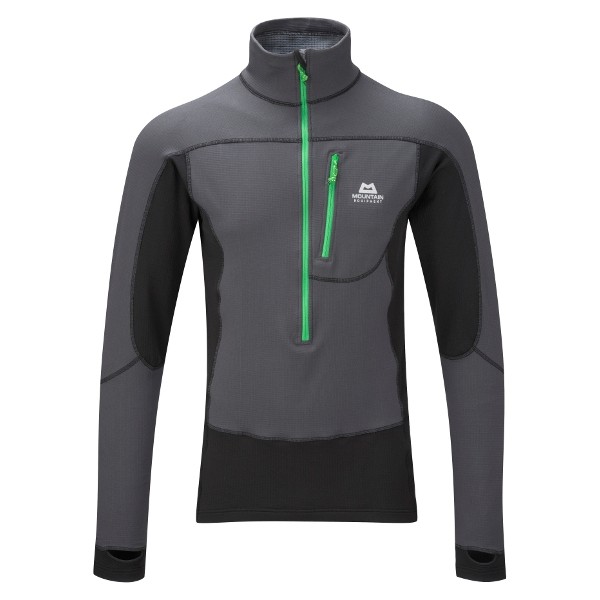
Mountain Equipment Eclipse Review

In recent years I have decided to move away from using soft shells in my mountain layering system to rather favoring fleeces. Fleeces are, generally, lighter than soft shells and tend to wick better. 
There are lots of fleeces on the marked and personally I like the light weight, well fitted sort of technical fleece.
Over the past few months I have been testing the Mens Eclipse Zip Tee from Mountain Equipment and here are my thoughts on it. 
First of all its very well fitted and isn't baggy, on me at least. If something fits one person it doesn't mean it fits the next but if you have a sort of athletic build then this will be fine.
The eclipse tee is very warm. This is some what of an advantage if your climbing in cold conditions but I have found it a bit too warm whilst dry tooling, even over the winter months!
I have used the eclipse quite a lot since getting it and it still isn't showing any signs of wear. I usually find that in products of this nature the thumb loops get damaged quite easily, but that is not the case with the eclipse. 
My review so far has been praising the eclipse, but if your reading a review I suppose you want to know what I didn't like. Not much is the answer. Everything on the fleece I have liked, however it is missing something; a hood. I am a big fan of hooded fleeces. I prefer not to wear a hat under a helmet in winter and instead use the hood from my fleece. There is a model of the Eclipse which has a hood, imaginatively called the Eclipse Hooded Tee, which I imagine is pretty great.
I really like this fleece. It is well fitted and warm, so great for winter adventures. The only thing it is missing is a hood. With the hood I would give the a maximum 2 thumbs up but without I'm afraid it has to be 1 thumb up and 1 thumb down.
The Mountain Equipment Eclipse Zip Tee is available from outdoorkit.co.uk with 10% off. 

Wednesday, 1 January 2014

My 2013 climbing year

So 2013 is now at an end an I think I can safely say that it is my most successful every year of climbing. I have managed to achieve personal best in all disciplines in climbing but also had some amazing days out and experiences.
Trying extra hard on Seal Song
According to my UKC profile I have ticked 459 climbs in 107 days out. The days out is definitely an underestimate as there have been a number of days when I have failed to climb anything at all!
2013 started off quite badly as I dislocated my elbow at the start of January and missed the Ice world cup! It could only really get better from here really.
Winter climbing is the way I usually start and end a year. This current winter season has been good for me so far. I have climbed personal bests with Cornucopia (VII 9) and Sioux Wall (VIII 8). My favorite winter day would have to be doing Orion Face and Tower Ridge on the same day back in April. I even managed a first ascent in Stob Coire nan Lochain with Alex McMillan in March, called Seattle Grooves.
Sioux Wall
Cornucopia
Ravens Edge
I have also done a lot of drytooling in 2013. Although I haven't improved my red point grade, despite being close, I have managed to flash/onsight a couple of M9's. I also managed to keep my hands on second place in the STS, loosing out to Peter Holder by one point!
Newtyle
I haven't really climbed too much trad this year but what I have done I have enjoyed. In May I managed to onsight my first E5, a route called The Quickening at Reiff in North West Scotland. In July I managed to climb another E5 at Dumbarton rock near Glasgow called Physical Graffiti. In June I made a trip to the Hebridean islands of Pabbay and Mingulay with some friends from university. I really enjoyed the trip and the highlight of it was climbing Voyage of Faith (E3) on Dun Mingulay on our last day. My favorite trad route of 2013 is quite close between Wuthering (Stanage), Empty on Endorphins (Reiff), Golden Fleece (Reiff) and Big Country Dreams (Cambusbarron).
The Quickening
Wuthering
I spent most of the summer driving around Northumberland bouldering, although I did manage a few trips further afield. The highlight of the summer has to have been climbing Sprung at Bowden Doors, my first font 7c! It is easy for the grade I know but you have to start somewhere don't you. I have done so much bouldering this summer so its hard to pick out my favorite problems. In June I managed to climb Spank the Monkey at Cambusbarron, which is one of the best boulder problems I have ever climbed, and its in a grotty hole in the ground which makes it even better. Similar in setting, but completely different in style, is Gloom at Rothely in Northumberland. I loved working this problem and was so chuffed to manage to climb it in July.
Gloom
I managed two problems this summer that I have tried a number of times before. These were Little Pixies (Back Bowden) and Si's Arete (Almscliff).
Si's Arete
Little Pixies
My last bouldering highlight comes from a crag just 15 minutes away from my flat. I finally managed to climb the Low Black Wall Traverse on Edinburgh Sailisbury Crags!
I have done a little bit of Sport climbing too, but this wasn't very impressive or interesting so its not really worth talking about. I even went to the Alps but its the same story there.
To finish of the year I have been selected to for the newly formed British Ice Climbing Team and will be competing at the 2014 Ice World Cup!
CAC Festival of Ice Final
I should also thank those who have supported me throughout the year. Firstly I should thank Outdoorkit.co.uk who have been supplying me with kit to test and review. I should also thanks Scarpa for some new footwear to see me through the coming winter season and Schmoolz for making me a pair of fatter indoor ice climbing tools. Red Goat and Rock City climbing walls, in York and Hull respectively, should also get a quick mention for supporting my climbing throughout the year. Also a massive thank you to everyone that I climbed with this year!
2013 has been my best year for climbing so far, and hopefully I can build on this for 2014.

Thursday, 26 December 2013

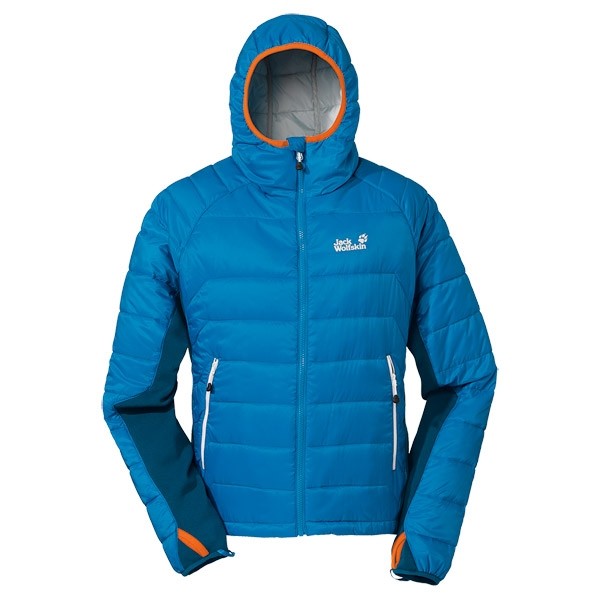
Jack Wolfskin Thermosphere Jacket Review


Jack Wolfskin is a company of which I have little experience using. Their kit does look quite good, although Im sure its not that hard to make things look good in a picture on the internet, but I have always been put off a bit by the name. Yes it is a bit silly but Jack Wolkskin just doesn't sound as appealing as Mountain Equipment or Mammut.
Testing in the Cairngorms
The Jack Wolfskin Thermosphere jacket is a semi insulated jacket with stretch panels under the arms hood. On first wearing the jacket I thought I had got the wrong size as it seemed really tight in the arms. I wasn't sure how much I was going to like this super tight feel but I have always think that having something very tight around my arms stops me from getting pumped. This tightness doesn't hinder movement, due to the stretchy panels.
Thermosphere jacket at the STS (under the shirt)
The jacket has a reasonably athletic fit to it, which combined with the tight sleeves, gives a non-bulky feel. This lack of bulk is useful if using the jacket for climbing in, or as a mid layer. I have used this jacket both whilst bouldering in cold conditions and as a mid layer underneath my waterproof whilst winter climbing. It has performed very well in both of these situations. The hood isn't really big enough to go over a helmet, although it will at a push, but does fit underneath quite nicely.
Climbing Magic Crack in the Thermosphere Jacket (blue hood)
There is not enough insulation to make this a belay jacket, but it is very good if used as part of a cold weather layering system.
I have been totally inseparable from this jacket since getting it. It performs well in the hills and is smart enough to wear around town (to the library mostly unfortunately!). If you are borderline in sizing then I would recommend sizing up though.
I absolutely love this jacket! I give it a maximum rating of 2 thumbs up.
The Thermosphere jacket is available from outdoorkit.co.uk with 10% off!

Tuesday, 17 December 2013

Hot Aches Distilled Review

Distilled is the new film recently brought out by climbing film makers Hot Aches Productions.
Distilled is a climbing film following mountain guide (I'm not sure on exactly what qualifications he has) Andy Cave around Scotland in winter.
Distilled doesn't really fit the usual mold of climbing film. There is no hyping about how beautiful and natural a line is. In fact the climbing seems to be more of a means to keep the viewers eye busy while Andy tells the story of his life. That isn't to say that the film is badly shot. It really isn't. Its just that when I watched it I found Andy's story more interesting than what he was climbing, which is strange for me.
One thing that stands out from this film is the very unique life that Andy has lived. He has gone from a kid from a Yorkshire coal pit with no GCSE's to a world renowned climber summiting Himalayan Peaks with a PhD.
The film follows Andy Cave around Scotland in some very Scottish looking weather. I don't often think that I should wear waterproof trousers when winter climbing, especially not while watching films, but this certainly did. I must have watched this film at least 5 times now. I'm still yet to work out all of the routes that are featured in it (those labels are a bit subtle guys!). I have to say that seeing how little gear Andy carries on routes makes me feel a bit ashamed to climb things looking like a moving gear store!
The film does end on a bit of a somber note where Andy talks about his ascent of the North Face of Changabang, which claimed the life of his climbing partner Brendan Murphy. It was quite interesting for me to learn how Andy recovered from this and has since been back to the Himalayas.
I found Distilled inspiring in a very odd way. Its not like hot aches previous winter climbing film, The Pinncacle, which got me really psyched because of what Smith and Marshall did. I really can't put my finger on the way that Distilled has inspired me.
All I can really say is you have to watch it. Im sure its not to everyone's taste but give it a chance.
I give Distilled 1 thumb up.

Tuesday, 26 November 2013

Mountain Equipment Guide Glove Review

Mountain Equipment have a long history of producing very good mountaineering kit, and the Guide Glove is no exception. Mountain Equipment describe the guide glove as being a "work horse glove for all round mountaineering".  It features a waterproof lining, nylon outer shell, a nose wiping thumb cover and a fibre pile and fleece lining.
These were the first gloves I ever bought for winter climbing in back in my first year at uni and I'm now on my third pair. Needless to say I really like them! I have used other gloves too but in the end I always come back to the Guides.
Guide Gloves being put through their paces on Sioux Wall
The insulation on these gloves seems to be a nice compromise between warmth and finger dexterity. Yes you will have more movement in the fingers in thin gloves and you'll be warmer in more insulated gloves but you need to find a balance between using fingers and feeling them. The guides seem to have done this very well.
I also like the little nose wiping patch. This wont work for er... a big pay load, but it does suffice to wipe away the shrapnel.
One of my first attempts at tooling  in Guides back in second year, not sure why I needed to woolly hat 
They also come with elastic wrist leashes. These are very useful for not accidentally dropping gloves half way up a route! We've all seen this done on the Ben haven't we. Don't be that person! Keep them attached to you at all times.
Guide gloves on the summit of Bein Bhan a long time ago!
Another useful feature for a winter glove is a hard wearing outer. Winter climbing ruins gloves but the guides do seem to stand up to a fair amount of abuse. The nylon shell seems to work well for this.
Used on Cornucopia too!
One bad aspect of these gloves is their waterproofness, or rather lack of. They just don't seem to really stay dry. This however has been a problem with all gloves I have ever used. Maybe its because my hands sweat too much. Who knows.
Last but not least is price. These gloves are quite cheap by winter gloves standards. You can usually find them at about £45. Seeing as you will go through gloves so fast I think it is a good idea to get relatively cheap ones. I have never found a pair of gloves which are as good as guides and this cheap!
I give Mountain Equipment Guide Gloves a rating of 1 thumb up, but it is oh so nearly 2! A top notch all round gloves!
Sorry about the pictures but its hard to get pictures of gloves. I am wearing the gloves in all of them, honest.
You can buy ME Guide Gloves from Outdoorkit.co.uk with 11% off!

Friday, 13 September 2013

Petzl Adjama Harness Review

I acquired a Petzl Adjama harness a while ago to test. I have since clocked up a good number of hours in the harness in a trip to the alps and a my usual central belt cragging and here are my thoughts on it.
Comfort: The Adjama is made with what Petzl call an "EndoFrame Constuction". The prefix Endo, in the instance, means to absorb. I'm not sure exactly what it absorbs, but it does sound cool. The designs gives an extra wide waist belt around the sides and doubled straps on both the leg and waist loops. After studying the harness I can't really work out what the doubled straps are, but rest assured they are there. This design seems to have worked as the harness is very comfortable to hang in for extended periods of time. I usually get very uncomfortable pressure points on my hips, but the Adjama seems to have eliminated this. The Adjama is also fine to walk in, as I found out after a long walk around the Vallee Blanche and Mer de Glace.
Gearing up at Refuge de Sele
Gear Loops: The Adjama features 4 fabric gear loops. There are two different types of gear loop on the harness. The front two are rigid and have a slightly asymmetrical shape, with the rear two being flexible and symmetrical. The shape of the front gear loops is important as I find I put most of my important gear on them. The front gear loops slope slightly towards the front of the harness so that when you remove a piece of gear then the rest of the gear slides forward. The rear ones are flexible to prevent pressure points when wearing a back pack. The gear loops seem plenty big enough even for a big alpine rock route rack. There are 2 caritool attachment points and a haul loop at the back of the harness too.
Adjama in the Alps
Adjustment: There is one buckle on each of the major weight bearing straps on the harness; the waist loop and 2 legs loops. These allow maximum adjustment for a minimum weight. The buckles are pre-double backed saving time and the possibly the dangerous scenario of forgetting to double them back yourself. The buckles are all easy to use, even with gloves on. The straps tuck neatly away once tightened. The leg loops expand enough to allow you to put it on over crampons and big boots, although maybe for speeds sake put it on before your crampons.
Looks: It comes in a sort of purple-grey colour. It looks a bit dull but it won't clash with whatever garish shirt/trousers combo you may be sporting. It also wont show up in photo's very well, as you may be able to tell from the pictures.
Weight: Mine is a M-L which weighs in at 420g. The small is lighter and large is heavier. Its not really a featherweight but its hardly extra bulky either.
Conclusions: I honestly can't fault this harness. Petzl are good at what they do and have made a very good, well thought out harness. Its comfy, not too heavy and has nice features. You won't be disappointed with this harness. It gets a healthy 2 thumbs up from me.
The Petzl Adjama harness is available from outdoorkit.co.uk with 10% off.

Saturday, 7 September 2013

Thermarest Ridge Rest Review

The Thermarest Ridge Rest is a foam sleeping mat made by Thermarest. Thermarest are big players in the self inflating sleeping mats market so I expected this to work well.
I got the mat for a trip to the Alps, where I used it for both campsite and high mountain bivi use. It performed well in all scenarios.
Why would anyone buy a foam mat instead of a self inflating one? Self inflating mats are the in thing in camping comfort, and with the introduction of the Thermarest Neo Air some are feather weight too. The main advantage of a foam mat is that putting a hole in it doesn't damage it. It is quite easy to accidentally stand on you sleeping mat in crampons, or maybe that sort of thing on happens on student mountaineering club meets. Either way accidents happen and if your mat doesn't inflate then it wont be comfy, and more importantly it won't insulate you from whatever surface you happen to be sleeping on.
This is where foam mats come in. The ridge rest isn't just any foam mat however. One side is silvery and reflective, preventing heat loss to the ground, the other side is green. The ridge rest gets its name from the ridges which are found covering both sides of the mat. These trap air further reducing heat loss to the ground. The air cells are too small to allow effective convection and air is a good insulator. It works in roughly the same way as double glazing or cavity wall insulation.
Ridges and the silvery coating
I am glad to report that the mat worked well. I was comfortably warm, although it never really got too cold. Most importantly I was comfortable. I went for the regular version, which is plenty long enough to accommodate my extended frame.
It is possible to cut down foam mats too without effecting their insulating properties. I previously had a ridge rest which I cut down and used as an inbuilt bivi mat inside my rucksack.
The downside of foam mats is that they have quite a large pack size, and the ridge rest is no exception. As I have said before though you can cut them down. Why not cut it down to as small as you think you can get away with?
If you had to take one mat with you on an alpine trip I would take a foam mat, and why not the ridge rest. It has been well designed to provide maximum comfort and insulation.
I give the ridge rest 1 thumb up.
The Thermarest Ridge Rest is available from outdoorkit.co.uk in 2 different weights of foam, both with 10% off. The mat reviewed here is the more beefy "Solar" version. 

Saturday, 17 August 2013

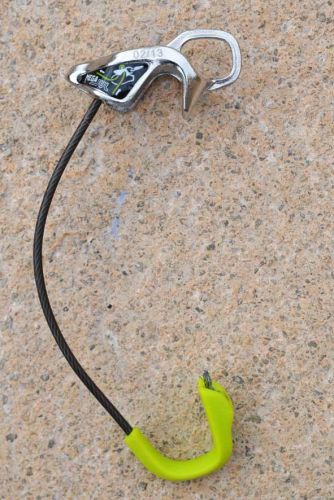
Edelrid Mega Jul Review

Edelrid have released a new belay plate to the market. In essence it is an auto locking tuber plate. Its name is the Mega Jul. It takes ropes between 7.8 and 10.5 mm and has a smaller brother called the Micro Jul.
If its just an auto locking device then why not just use a trusty GriGri I hear you say? Well a GriGri only works on one rope, unlike the Mega Jul.
The Mammut Smart Alpine works on 2 ropes what about that? Yes Mammut does have and auto locking belay plate which works on 2 ropes but it doesn't have a guide mode, which is very useful if you are doing a multi-pitch route. The Mega Jul also weighs much less than the smart (65g instead of 125g).
Here is the operational video which Edelrid have released to go with the Mega Jul. I think its best if they explain how to use it.

I really like the auto locking feature of the belay plate. It makes it much nicer to belay with when sport climbing. The handle makes it easy and smooth to pay out slack for the leader. Lowering takes a bit of getting used to but is easy to do once you have practiced a bit.
When I have shown the belay plate to people they seem a bit put off by how thin the metal work is. I suppose this is just progress though. All belay plates need to meet the same criteria to be put on the market so I have no problem with the quality of the materials used.

So how does it stack up against other conventional belay plates? The Mega Jul does everything a normal guide mode belay plate does, and then some, but does this come at any disadvantage.
Well weight wise no. Black Diamonds ATC Guide weights 88g, 23g heavier than the Mega Jul, and the Petzl Reverso 4 comes in at 59g, only 6g lighter. I think to have the auto locking function available its worth the extra 6g.
Guide mode is set up in a slightly different way than with the Black Diamond and Petzl plates but it all works the same.
The Mega Jul comes with the added advantage of allowing you to abseil without using a prussick. Personally I don't like abseiling so I will just stick with what I know (a prussick), but its nice to know its there.

Unfortunately the lightweight Mega Jul does seem to have some problems. I have seen 2 different images online of the exact same breakage, where the handle breaks off from the main tuber plate. This is a bit worrying, and fortunately hasn't happened to me.

The Edelrid Mega Jul gets a rating of 1 thumb down. I really like the auto locking feature but those breakages really need to be seen to by the guys at Edelrid. I really wish I could have given it a higher score.